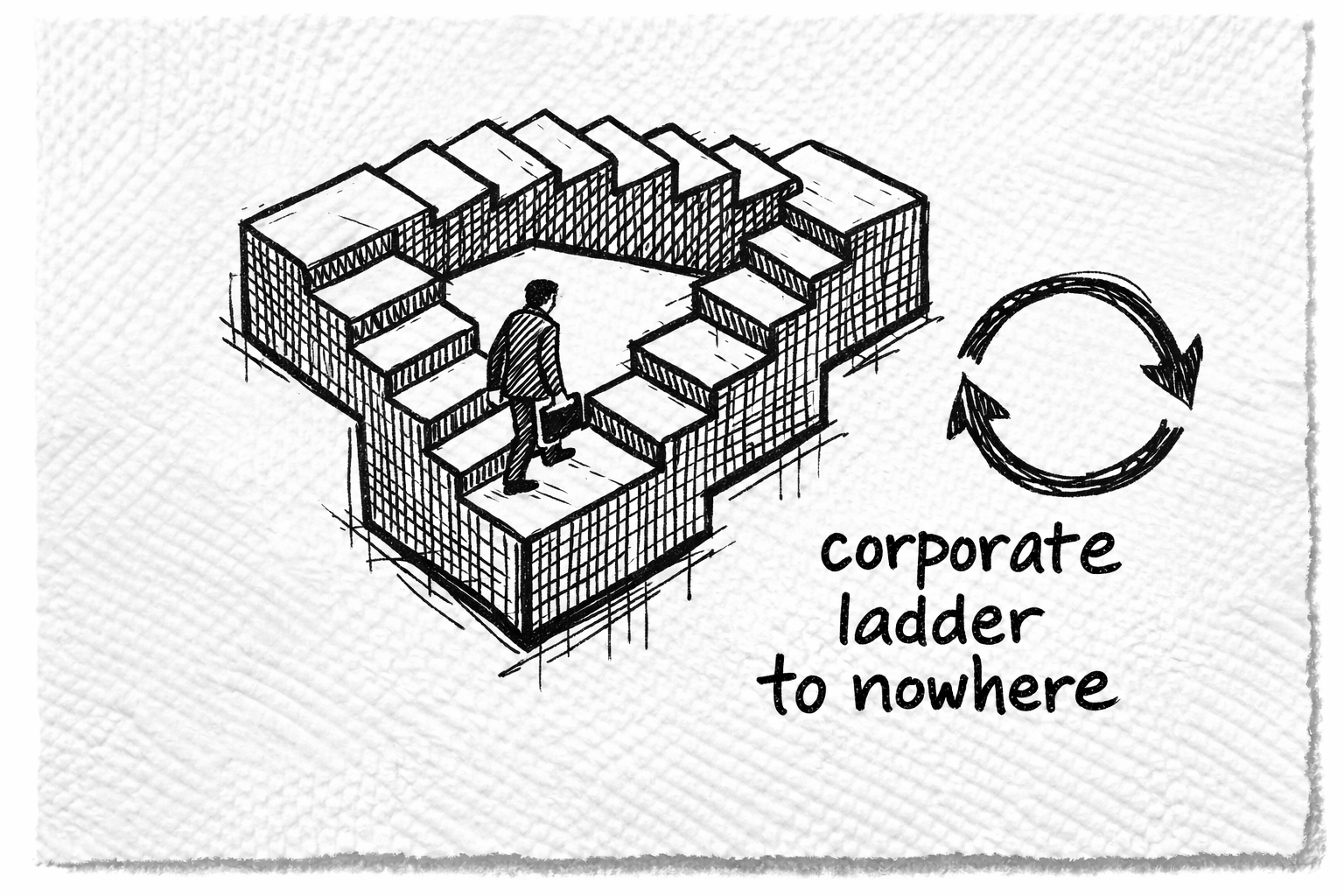
There's a clinical term for what happens when your job stops asking anything of you. It's called boreout, the opposite of burnout, and every bit as destructive. You're not overwhelmed. You're underwhelmed. You show up, you sit down, you do the bare minimum the role requires, and you slowly, imperceptibly, start to disappear.
The thing about boreout is that it looks like winning from the outside. You're employed. You're paid. Maybe even paid well. Your parents are proud. Your LinkedIn looks respectable. But inside? The hours drag like wet cement. You can't remember the last time work made you think, really think. And somewhere in the back of your mind, a quiet voice is asking a question you'd rather not answer: Am I becoming less?
Your skills have an expiration date
Here's what nobody tells you about coasting: skills don't freeze when you stop using them. They rot. In the 1980s, technical skills had a half-life of about fifteen years. Today it's closer to five. In fields like software or data science, it might be two.
Every month you spend in a role that doesn't challenge you is a month your marketable abilities are quietly atrophying. You're not treading water. You're sinking slowly enough that you don't notice the waterline rising. And when you finally try to leave, whether by choice or because someone "restructures" you out, you discover the market moved on without you.
The people who took riskier jobs with steeper learning curves? They've been compounding their capabilities. You've been depreciating yours.
The loyalty penalty is real
Conventional wisdom used to say that loyalty gets rewarded. The data says otherwise. During the post-pandemic job market, people who switched jobs saw pay increases above 15 percent. Loyal employees? Seven or eight. Among jobs paying $125,000 or more, long-tenured employees actually earn less than newer hires in nearly a third of cases.
Read that again. You stayed. You were faithful. And the person who just walked in the door is making more than you.
The spending trap
Here's where it gets really insidious. Research on compensatory consumption shows that when people feel stuck or unfulfilled in one area of life, they spend money to feel something in another. Retail therapy isn't a joke. It's a documented coping mechanism.
The person earning good money at a soul-crushing job doesn't bank the difference between their salary and what they'd make elsewhere. They spend it trying to feel alive on weekends. The nice dinners, the impulse purchases, the vacations that feel more like escape plans than actual rest. Nearly half of people earning six figures still live paycheck to paycheck. Not because they're bad with money. Because they're using money as anaesthesia.
Job dissatisfaction creates financial stress. Financial stress increases burnout. Burnout decreases job satisfaction. The cycle feeds itself, and the golden handcuffs get tighter.
The question worth asking
This isn't a lecture about quitting your job tomorrow. Depth matters. Expertise compounds. There's real value in mastering a domain. But there's a difference between staying because you're growing and staying because leaving feels too hard.
So here's the only question that actually matters: Is your current job making you more capable or less?
Not happier in the moment (that fluctuates). Not more comfortable (comfort can be a warning sign). More capable. More valuable. More prepared for whatever comes next.
If the honest answer is no, that's not a moral failing. It's just information about a situation that needs to change. The staircase in the doodle keeps going up, but you're not getting anywhere. At some point, you have to step off.
📚 Ready to think differently about money?
Explore our Learn section for tools and frameworks that help you make better financial decisions.
Explore the Learn Section →